

Change can feel scary, confusing, or even overwhelming. Maybe you’re going through a big life shift and searching for symbols of change to make sense of it all. You might be wondering about change symbolism, the universal symbol for change, or even asking yourself what symbolizes change and why certain symbols that represent change feel so powerful. In this post on Symbolism of Change: Meaning, Spirituality, and Life Lessons, we’ll gently explore those answers together.
In Symbolism of Change: Meaning, Spirituality, and Life Lessons, you’ll learn the deeper meanings behind common symbols and how they connect to your personal journey. This guide will break things down in simple words, covering spiritual insights, cultural meanings, and real-life lessons. By the end, you’ll understand how these symbols can bring comfort, clarity, and strength during times of transformation.
🌸 Natural Symbols of Change in Everyday Life
Nature teaches us about transformation every single day. The natural world operates in cycles of growth, decay, and renewal. These patterns have inspired humanity’s deepest understanding of change symbolism.
When we observe nature closely, we see constant metamorphosis. Mountains erode, rivers carve new paths, and forests regenerate after fires. Every element carries lessons about personal growth and spiritual growth.
The most powerful symbols of change come from our environment. They’re accessible, observable, and deeply meaningful. Let’s explore these natural teachers of transformation and renewal.
🌙 The Moon
The moon is perhaps the most universal symbol for change across cultures. Its phases mirror life’s constant ebb and flow. From new moon to full moon, it teaches us about cycles.
Each lunar phase represents a different stage of transformation. The waxing moon symbolizes growth and expansion. The waning moon represents release and letting go. This celestial body reminds us that change follows predictable rhythms.
Many spiritual traditions use moon phases meaning for rituals and reflection. The moon’s gravitational pull affects ocean tides, connecting it to emotional transformation. It shows us that even in darkness, light will return.
🍂 The Seasons
Seasons symbolism offers clear lessons about life transitions. Spring bursts with new beginnings and fresh possibilities. Summer brings abundance and the full expression of growth.
Autumn teaches us about graceful release and preparation. Trees shed leaves without resistance, showing natural surrender. Winter represents rest, death and rebirth symbolism, and the quiet work of transformation beneath the surface.
These four phases mirror human development perfectly. We experience personal springs of enthusiasm, summers of productivity, autumns of reflection, and winters of contemplation. Spring renewal always follows winter’s stillness, proving that rebirth is guaranteed.
🌊 Water
Water symbolism is central to understanding transformation worldwide. Rivers flow endlessly forward, never returning to their source. They represent the irreversible nature of time and change.
Ocean tides meaning connects to emotional waves we experience. High tides bring intensity; low tides offer calm reflection. The ocean’s depth symbolizes the unconscious mind undergoing inner transformation.
Rain cleansing symbolism appears in countless traditions as spiritual purification. Rain washes away the old, nourishing new growth. Waterfalls demonstrate the beauty of letting go and trusting the journey downward.
🔥 Fire
Fire symbolism represents the most dramatic form of transformation. Fire destroys completely but also purifies and renews. Forest fires clear dead wood, allowing new ecosystems to flourish.
The phoenix myth shows fire’s dual nature, death and resurrection happening simultaneously. Burning away the old creates space for the new. This element teaches that sometimes destruction is necessary for growth.
Fire transforms everything it touches, changing solid to ash and releasing energy. It symbolizes passion, spiritual awakening, and the courage to burn away what no longer serves. The light fire brings represents enlightenment emerging from darkness.
🦋 The Butterfly
The butterfly meaning is synonymous with metamorphosis across all cultures. This creature undergoes complete transformation from caterpillar to winged beauty. It’s the ultimate symbol of becoming someone entirely new.
Inside the chrysalis, the caterpillar literally dissolves into liquid before reforming. This process mirrors personal growth that requires breaking down old identities. The butterfly emerges with wings, gaining freedom it never had before.
Butterflies symbolize hope and courage during difficult transitions. Their brief lifespan reminds us of life’s impermanence. Yet their beauty inspires us to embrace change rather than fear it.
🌏 Cultural and Historical Symbols of Change
Every culture developed unique symbols that represent change based on their environment and beliefs. These historical emblems reveal universal human experiences. Ancient wisdom still guides modern transformations.
🏺 Ancient Greece and Rome
Greek symbolism for change centered on mythological transformation stories. The phoenix rising from ashes became immortal through rebirth. This bird represents resilience and renewal after devastating loss.
Janus god meaning offers another powerful Roman symbol, a two-faced deity. One face looks backward at the past; the other gazes forward to the future. Janus ruled doorways and transitions, blessing new beginnings.
Greek metamorphosis tales taught that change could be punishment or gift. Daphne became a laurel tree, Arachne transformed into a spider. These stories explored identity shifts and consequences of transformation.
🐍 Aztec and Mayan Traditions
Quetzalcoatl symbolism dominated Mesoamerican change symbolism. This feathered serpent god represented the union of earth and sky. The snake’s ability to shed skin made it sacred.
Snake shedding skin became a powerful metaphor for renewal and rebirth. Aztecs saw this as proof that transformation was natural and cyclical. The serpent moved between worlds, symbolizing shamanic journeys and spiritual growth.
Mayan calendars tracked cycles of life with precise mathematical accuracy. They understood time as spiraling rather than linear. Each cycle brought opportunities for collective and individual transformation.
🐉 Chinese Symbolism
Dragon symbolism in China represents celestial power and beneficial change. Unlike Western dragons, Chinese dragons brought rain and prosperity. They controlled natural forces that enabled transformation.
Yin yang balance teaches that change emerges from opposing forces. Light and dark, masculine and feminine, action and rest, all create movement. This symbol shows that change is constant through dynamic equilibrium.
Chinese philosophy embraced impermanence as wisdom rather than suffering. The I Ching (Book of Changes) became a divination system entirely focused on navigating transitions. It taught that flexibility ensures survival during uncertainty.
🍵 Japanese Culture
Cherry blossom symbolism captures life’s beautiful impermanence in Japanese culture. These flowers bloom spectacularly for mere days before falling. They teach acceptance of life transitions with grace and appreciation.
Kintsugi meaning offers profound lessons about transformation through damage. This art repairs broken pottery with gold, highlighting fractures rather than hiding them. The piece becomes more valuable after breaking.
Kintsugi teaches that our wounds and changes make us unique. Resilience and renewal don’t mean returning to the original state. True transformation creates something more beautiful than before.
🌻 Native American Traditions
Flying high, the eagle sees the larger pattern invisible from the ground. It symbolizes wisdom to understand life transitions from a spiritual viewpoint.
Native traditions honored seasons symbolism through ceremonies marking each transition. Spring planting rituals, summer celebrations, autumn harvests, and winter rebirth ceremonies maintained balance. These practices acknowledged nature’s teaching about cycles of life.
The medicine wheel depicted life’s continuous circle of transformation. Each direction, season, and life stage held specific lessons. This symbol reminded people that change moves in sacred patterns.
🌹 Victorian Symbolism
Victorian flower language created elaborate symbols of change and new beginnings. Each bloom carried specific meanings for communication. Roses symbolized different types of love and life stages depending on color.
Morning glories represented affection and fleeting life, blooming briefly each day. Chrysanthemums meant rebirth and joy in many Asian cultures but death in some European contexts. This shows how change symbolism varies across societies.
Victorians used flowers to mark every life transition, births, weddings, funerals. Sending the right bloom communicated complex emotions about transformation. This practice recognized that symbols that represent change help us process profound experiences.
🌌 Spiritual and Religious Symbolism for Change
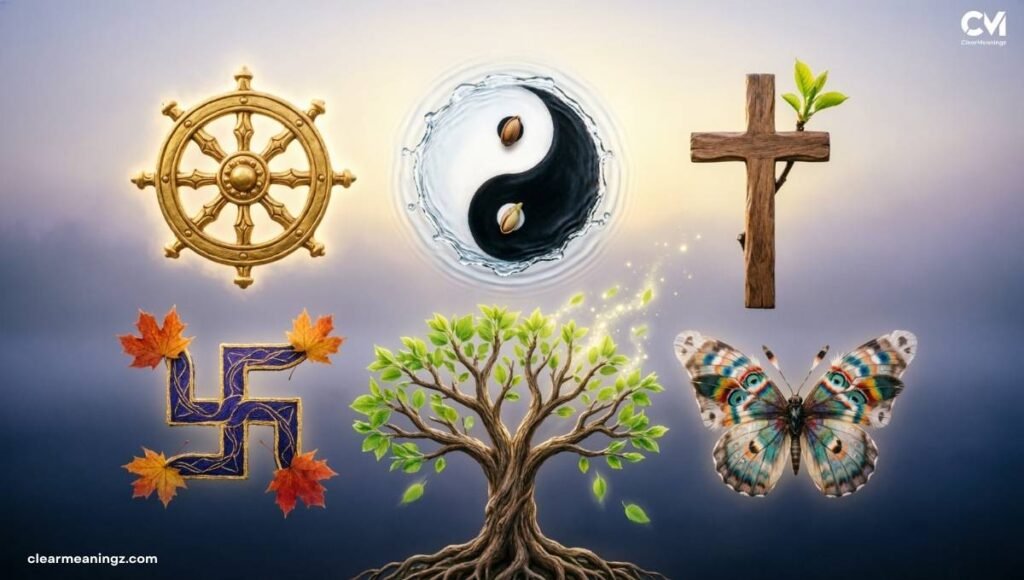
Religion and spirituality offer humanity’s deepest explorations of transformation. Sacred symbols of change provide comfort during life’s hardest moments. They connect personal growth to divine purpose.
Faith traditions worldwide recognize that spiritual growth requires metamorphosis. Sacred texts and rituals guide believers through life transitions. Let’s explore how major religions symbolize change and growth.
✝️ Christianity
Baptism rebirth stands as Christianity’s central symbol of change. Immersion in water represents death to the old self and resurrection into new life. This ritual enacts spiritual transformation physically.
The Cross itself symbolizes the ultimate death and rebirth symbolism. Christ’s crucifixion and resurrection promise that endings lead to eternal renewal. Easter celebrates this triumph of life over death.
Christian conversion narratives emphasize radical inner transformation. Saul becoming Paul on the Damascus road shows complete identity shift. These stories teach that spiritual awakening changes everything about how we live.
🕉️ Hinduism
Lotus flower meaning in Hinduism represents enlightenment emerging from muddy waters. This flower roots in dirt but blooms pristine and beautiful. It symbolizes spiritual growth despite difficult circumstances.
Shiva the Destroyer plays a crucial role in Hindu change symbolism. Destruction isn’t evil but necessary for renewal. Without breaking down old forms, new creation cannot emerge.
Hindu philosophy teaches that cycles of life include countless rebirths. Each lifetime offers opportunities for self-discovery and growth. The ultimate goal is transformation so complete that the soul escapes the cycle entirely.
☸️ Buddhism
Buddhist teaching centers entirely on impermanence as reality’s fundamental nature. Nothing stays the same; all things arise and pass away. Accepting this truth brings peace rather than suffering.
Mandala meaning in Buddhism illustrates cycles of life and cosmic order. Monks create intricate sand mandalas, then destroy them ceremonially. This demonstrates non-attachment and the beauty of transformation.
The Buddha’s enlightenment represents the ultimate inner transformation possible for humans. Sitting under the Bodhi tree, he awakened to reality’s true nature. Buddhist practice guides followers through their own metamorphosis toward liberation.
✡️ Judaism
The Exodus transformation story defines Jewish identity and change symbolism. Leaving slavery in Egypt represents liberation and rebirth as a free people. Wandering forty years in the desert symbolized necessary transformation before entering the Promised Land.
Jewish life cycle rituals mark every major life transition. Bar and Bat Mitzvah ceremonies celebrate becoming spiritually responsible. Weddings, births, and mourning practices all acknowledge transformation’s sacred nature.
The shofar (ram’s horn) blown on Rosh Hashanah calls people to spiritual awakening and renewal. High Holy Days offer annual opportunities for repentance and personal growth. This cycle reinforces that change and growth are continuous processes.
🌙 Islam
Hijra migration meaning in Islam symbolizes transformation through sacrifice and faith. Muhammad’s journey from Mecca to Medina marked Islam’s beginning. This migration represents leaving the familiar for new beginnings in obedience to divine will.
The Islamic lunar calendar itself emphasizes cycles of life and renewal. Each month begins with the new moon’s sighting. Ramadan’s fasting and spiritual growth reset believers’ focus annually.
The Hajj pilgrimage represents transformation through ritual journey. Pilgrims wear simple white garments, symbolizing equality and rebirth. Circling the Kaaba connects believers to cycles that transcend individual lifetimes.
🎨 Symbolism for Change in Art and Literature
Artists and writers have always explored transformation as a central theme. Creative works make abstract change symbolism tangible and emotionally resonant. They help us understand our own metamorphosis.
In Literature
Classic literature overflows with symbols that represent change. Ovid’s “Metamorphoses” tells transformation stories where gods turn humans into animals, trees, and stars. These tales explore identity’s fluid nature.
Modern novels continue exploring what symbolizes change through character development. Bildungsroman (coming-of-age stories) track protagonists’ personal growth from innocence to experience. Each challenge forces inner transformation.
Science fiction often uses physical metamorphosis to explore psychological themes. Kafka’s “The Metamorphosis” uses a man’s transformation into an insect to examine alienation. The butterfly effect in Ray Bradbury’s work shows how small changes cascade into massive consequences.
In Poetry
Poets use nature’s symbols of change to express human emotions. Rumi’s verses frame transformation as divine love’s natural result. His poetry invites readers into spiritual awakening through metaphor.
Romantic poets celebrated seasons symbolism to mirror emotional states. Wordsworth’s daffodils represented renewal after winter’s depression. Keats’ “Ode to Autumn” found beauty in transition and letting go.
Haiku masters like Bashō captured impermanence in three lines. Cherry blossoms, falling leaves, and melting snow became profound meditations on change’s fleeting nature. These brief poems contain entire philosophies of transformation.
In Visual Arts
Surrealist painters depicted metamorphosis through impossible transformations. Salvador Dalí’s melting clocks symbolize time’s fluidity. These dreamlike images represent inner transformation made visible.
Impressionist painters used changing light to capture impermanence. Monet’s water lily series showed the same scene in different seasons and times. Each painting proved that nothing stays static.
Contemporary artists use transformation to explore identity and social change. Performance art often involves physical metamorphosis witnessed by audiences. Installation art creates environments that shift as viewers move through them.
🎨 Common Symbols of Change by Color
Color carries powerful change symbolism across cultures. Different hues represent specific types of transformation. Understanding color meanings deepens our grasp of symbols that represent change.
| Color | Change Symbolism | Meaning |
| Blue | Emotional transformation | Calm acceptance, flowing like water, depth of feeling |
| Green | Renewal and growth | New beginnings, spring renewal, hope emerging |
| Red | Passionate change | Drastic transformation, sometimes destructive, powerful energy |
| White | Spiritual rebirth | Purity, baptism rebirth, clean slate, innocence |
| Purple | Inner transformation | Spiritual awakening, mystery, wisdom through change |
| Black | Endings and mystery | Death and rebirth symbolism, unknown leading to renewal |
| Yellow | Joy in transition | Optimism, enlightenment, illumination through change |
| Orange | Creative transformation | Enthusiasm, courage, warmth during life transitions |
Colors in nature reinforce these associations. Green shoots after fire, golden autumn transition, white snow covering everything before winter rebirth. We instinctively understand these visual symbols of change.
Color symbolism meaning varies between cultures, but core patterns persist. White means death in some Eastern traditions while representing purity in Western contexts. Yet both connect it to major transformation.
Using appropriate colors in symbolism for change tattoo designs strengthens their meaning. A phoenix rising in red and gold emphasizes passionate rebirth. Blue butterfly tattoos suggest peaceful emotional transformation.
💍 Symbols of Change in Modern Life
Change symbolism isn’t just ancient history, it’s alive in contemporary culture. Modern people create and use symbols that represent change in daily life. These practices help us navigate personal growth and life transitions.
🌟 Tattoos
Symbolism for change tattoo designs have become incredibly popular. People mark major transformations permanently on their skin. These symbols serve as constant reminders of resilience and renewal.
Phoenix rising tattoos represent overcoming trauma and emerging stronger. The mythical bird’s rebirth from ashes resonates with recovery stories. Many survivors choose this image to commemorate their journey.
Butterfly meaning makes them perfect for transformation tattoos. People get them after recovery, career changes, or spiritual awakening. The metamorphosis from caterpillar to butterfly mirrors their own evolution.
Wave and water symbolism tattoos represent life’s constant flow. Ocean tides meaning reminds wearers to accept emotional ups and downs. River symbolism emphasizes moving forward despite obstacles.
🏡 Décor
Feng Shui change practices use home décor to encourage positive transformation. Flowing water fountains attract beneficial energy and symbolize continuous movement. Mirrors expand space and reflect new possibilities.
Plants bring renewal energy into living spaces. Bamboo represents flexibility during change. Succulents demonstrate resilience by thriving with minimal resources. Each plant becomes a living symbol of change and new beginnings.
Seasonal decorating honors cycles of life and seasons symbolism. Changing displays with nature’s rhythms keeps us connected to transformation’s natural pace. This practice acknowledges impermanence rather than resisting it.
🧘 Mindfulness & Healing
Mandala meaning in meditation centers on transformation and wholeness. Creating mandalas focuses attention while representing life’s circular nature. Jung used mandala drawing for psychological inner transformation.
Dream journals help process symbolism of change in dreams. Recording dreams reveals unconscious transformation patterns. Recurring symbols guide self-discovery and personal growth.
Mindfulness practices teach acceptance of impermanence. Meditation helps us observe thoughts and feelings changing constantly. This awareness reduces suffering by showing that difficult states naturally shift.
💒 Weddings
Wedding symbolism revolves entirely around life transitions and new beginnings. Exchanging rings creates an unbroken circle of commitment. The ceremony marks a profound identity shift for both partners.
White wedding dresses symbolize spiritual rebirth into married life in Western traditions. Other cultures use red, gold, or multicolored garments representing prosperity and transformation. Each tradition honors the same fundamental change.
Threshold rituals like carrying the bride over appear in many cultures. Crossing from one space to another symbolizes entering a new life phase. These actions make internal transformation visible through physical movement.
Also Read About: Dua e Istikhara: Find Peace in Every Decision
🌙 Symbolism of Change in Dreams
Dreams speak in symbols, revealing unconscious transformation. Understanding what symbolizes change in dreams unlocks their guidance. Our sleeping minds process life transitions through powerful imagery.
Common dream symbols that represent change appear across cultures:
• Butterflies signal new beginnings and successful metamorphosis • Snakes represent rebirth through shedding old patterns (snake shedding skin) • Water indicates emotional transformation and unconscious currents • Death rarely means literal death, usually symbolizes endings leading to renewal • Travel/journeys reflect life transitions and self-discovery paths • Houses changing represent shifts in inner transformation and identity • Pregnancy symbolizes creative projects or personal growth gestating • Fire suggests purification and dramatic spiritual awakening
Dream interpretation transformation requires understanding context and emotions. A snake might terrify one dreamer while fascinating another. The feeling reveals whether change feels threatening or exciting.
Recurring dreams about transformation indicate unfinished psychological work. The unconscious repeats symbols until we understand their message. Paying attention accelerates personal growth and spiritual growth.
Moon phases meaning in dreams connects to feminine cycles and intuition. A full moon might represent culmination and clarity. A new moon suggests new beginnings emerging from darkness.
🧭 Life Lessons from Change Symbolism
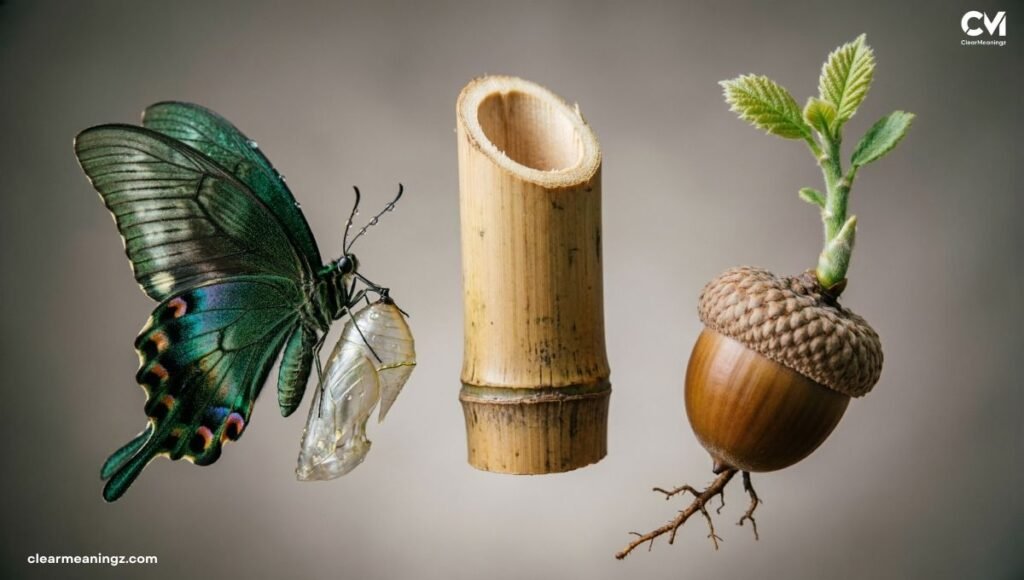
Symbols of change teach timeless wisdom about navigating transformation. These lessons emerge from nature, culture, religion, and personal experience. Understanding them helps us embrace rather than resist life’s inevitable shifts.
Change is inevitable, resisting creates unnecessary suffering. Like fighting ocean tides, resistance exhausts us. Accepting impermanence brings peace and flexibility. Nature never fights its own cycles of life.
Transformation requires letting go before receiving something new. The butterfly can’t fly while clinging to caterpillar identity. Autumn transition teaches that release isn’t loss but preparation. We must empty our hands to grasp new possibilities.
Growth follows cyclical patterns, not straight lines. Seasons symbolism shows that apparent regression (winter) enables future renewal (spring). Trust the process even during dormant phases. Your winter rebirth is preparing underground.
Endings and beginnings are inseparable. Every sunset creates tomorrow’s sunrise. Death and rebirth symbolism appears universally because it reflects reality’s structure. The phoenix rising cannot occur without the fire.
Small changes create massive transformations over time. Rivers carve canyons one drop at a time. The butterfly effect proves that tiny shifts cascade into enormous consequences. Your daily choices shape your entire metamorphosis.
Symbols anchor meaning during chaos. When life transitions overwhelm us, symbols that represent change provide stability. They connect our experience to larger patterns. You’re not alone, countless others traveled this path before you.
Resilience means transforming through adversity, not returning unchanged. Kintsugi meaning proves that breaking can make us more beautiful. Scars become sources of strength and wisdom. Your cracks let the light enter.
Trust the process of transformation even when you can’t see results. The caterpillar dissolving in the chrysalis has no idea it’s becoming a butterfly. Spiritual growth often feels like disintegration before rebirth emerges.
These lessons from change symbolism remind us that transformation is life’s fundamental nature. Fighting this truth causes suffering. Embracing it opens possibilities we couldn’t previously imagine. Symbols of change and new beginnings guide us through uncertainty toward renewal and hope and courage.
Frequently Asked Questions
What symbols represent change?
The butterfly and phoenix are powerful examples in Symbolism of Change across cultures.
What symbolizes new beginnings?
The sunrise and lotus flower reflect fresh starts in Symbolism of Change teachings.
What symbolizes embracing change?
Flowing water shows acceptance and trust, central themes in Symbolism of Change.
What symbol stands for change?
The phoenix rising from ashes stands strong in Symbolism of Change traditions.
What is the symbol for change?
The butterfly remains the most recognized icon within Symbolism of Change worldwide.
What picture symbolizes change?
A river moving forward beautifully captures Symbolism of Change and life transitions.
Conclusion
Change is part of every life. We see it in nature and feel it in our hearts. Symbolism of Change helps us understand these moments. It gives meaning to growth, loss, and new beginnings. The many symbols of change remind us that nothing stays the same forever. When we study change symbolism, we start to see hope instead of fear. We begin to ask, what symbolizes change in our own journey. Each culture shares a universal symbol for change to guide people through uncertain times.
In the end, Symbolism of Change teaches us courage and trust. The symbols that represent change show that endings bring fresh starts. Whether it is a butterfly, river, or phoenix, every sign carries wisdom. Symbolism of Change is not just history or art. It is personal and powerful. When we accept Symbolism of Change, we grow stronger every day.

Hi! I’m the creator of ClearMeaningz, sharing simple and helpful content for everyone. With 2+ years of experience and 20+ happy clients, I break down topics into easy reads. My goal is to make learning fun and clear. Join me on this journey of knowledge and growth!