

Ever find a name that sounds beautiful, but you still stop and think about the Savannah Meaning before choosing it? I’ve been there too, wondering about the savannah name meaning, savannah name meaning biblical, and what does the name savannah mean when it really matters. You might also be asking savannah meaning name questions or simply what does savannah mean for a deeper reason. Picking a name feels big, and you just want to get it right.
In this post, you’ll get a clear and simple breakdown of the Savannah Meaning, from its origin to spiritual and biblical connections. We’ll talk about where the name comes from, what it represents, and the feelings and traits often linked to it. You’ll also find helpful insights that make the name easier to understand and connect with. By the end, you’ll know if Savannah is truly the right name for you.
The Origin of the Name “Savannah”
The Savannah name origin traces back to the Spanish word “sabana.” This term describes a treeless plain or grassland. Spanish explorers borrowed it from the Taino people, indigenous to the Caribbean islands. The Taino used it to describe flat, grassy areas in their homeland.
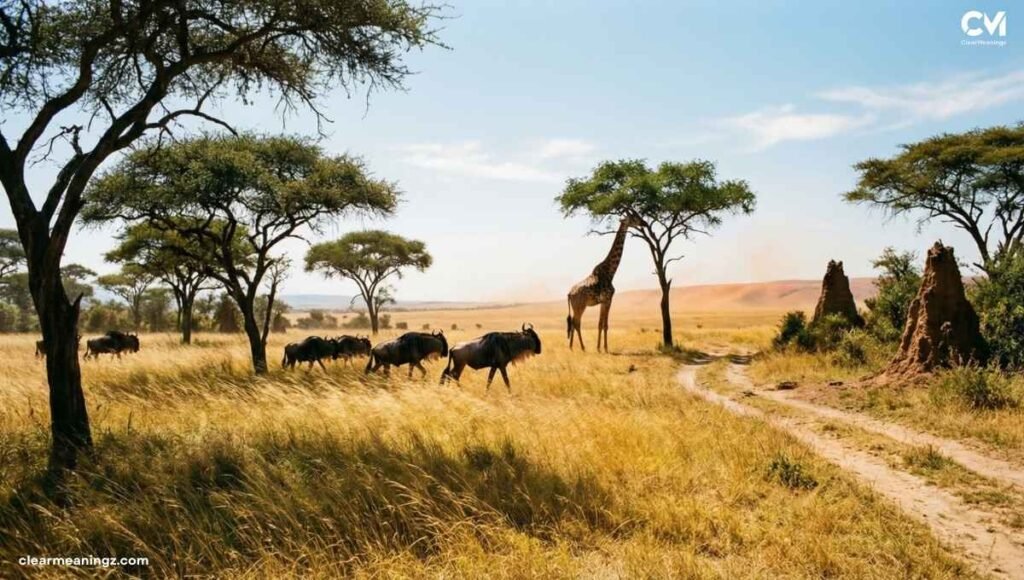
Over time, the word evolved into “savanna” in English. It refers to those wide, open grasslands you see in parts of Africa and South America. Think of the Savannah Africa landscape, golden grass stretching endlessly under blue skies, dotted with acacia trees and roaming wildlife.
The name became associated with natural beauty and freedom. It evokes images of savanna animals like lions, elephants, and zebras moving across the plains. There’s something majestic about it, something that speaks to both wildness and peace.
But there’s another layer to this story.
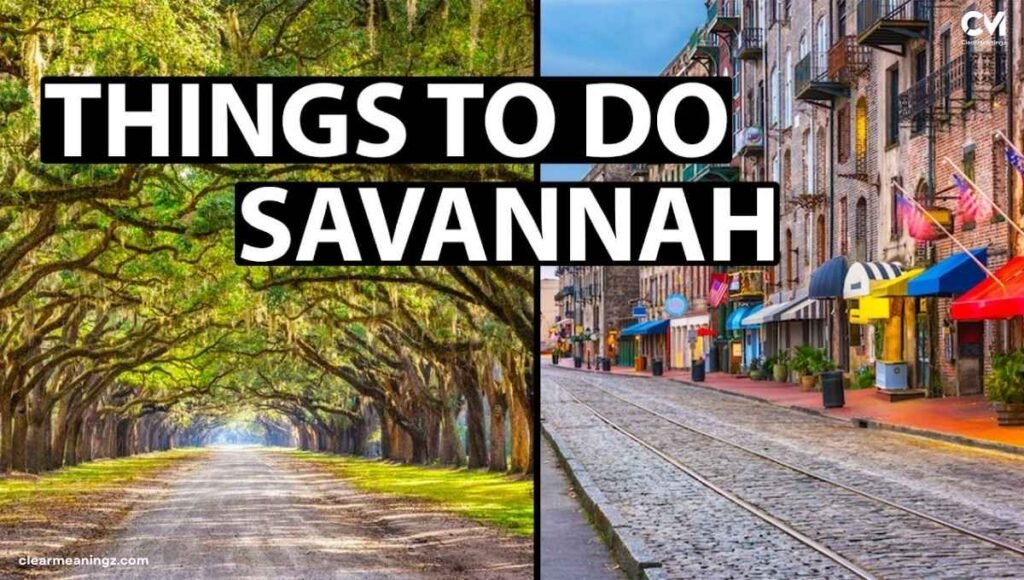
The city of Savannah, Georgia, played a huge role in popularizing the name. Founded in 1733, this southern city is known for its historic charm, oak-lined streets, and coastal beauty. The city’s elegant reputation helped transform “Savannah” from a geographical term into a beloved girl name.
Parents in the 1980s started choosing Savannah for their daughters. The name felt fresh, sophisticated, and connected to nature. It had that perfect balance, familiar enough to pronounce easily, unique enough to stand out.
Today, Savannah ranks among the most popular baby girl names in the United States. It’s a place name that became personal, a nature word that became intimate. And it carries all those layers of meaning with grace.
The Spiritual Meaning of the Name “Savannah”
The spiritual meaning of the name Savannah connects to openness, freedom, and natural harmony. When you think of a savanna grassland, what comes to mind? Wide horizons. Endless sky. Room to breathe and grow.
People with this name often embody these qualities. They tend to be open-hearted, welcoming, and peaceful. There’s a calmness to them, like the gentle breeze that moves through tall grass. Yet beneath that softness lies real strength.
Spiritually, Savannah represents:
- Freedom and independence – Like the open plains, there’s space to be yourself
- Connection to nature – A grounding presence that feels authentic
- Peace and tranquility – Not passive, but actively choosing calm
- Growth and expansion – Room to develop without limits
- Balance and harmony – Finding middle ground between strength and gentleness
In spiritual circles, names tied to nature carry special significance. They suggest someone who understands life’s rhythms. Someone who flows with change rather than fighting it. Savannah speaks to that wisdom.
The wide-open plain serves as a powerful metaphor. It reminds us that life is a journey, not a destination. There’s beauty in the space between where you’ve been and where you’re going. People named Savannah often live with this awareness.
The name also suggests nurturing energy.
Just as the savanna grassland supports countless forms of life, someone named Savannah often creates space for others to thrive. They listen well. They make people feel safe. Their presence is like shade on a hot day, refreshing and necessary.
This doesn’t mean they’re pushy or overbearing. Instead, they lead by example. They show others what it looks like to live authentically, to choose peace over chaos, to stay rooted while remaining open.
Many spiritual traditions value these exact qualities. Whether you look at Christianity, Buddhism, or earth-based spiritualities, the themes remain consistent. Openness. Peace. Connection. Growth.
Savannah captures all of this in a single name. It’s not just what you call someone, it’s an invitation to live a certain way.
Popular Nicknames for “Savannah” with Meaning
Savannah is versatile enough to offer plenty of options. Whether you want something cute, classic, or completely unique, there’s a nickname for Savannah that fits. These shorter versions let the name adapt as your child grows, giving them choices along the way.
Here’s a comprehensive table of popular nicknames:
| Nickname | Style | Meaning/Vibe |
| Sav | Short & Cool | Simple, confident, modern |
| Savvy | Playful | Smart, clever, quick-thinking |
| Anna | Classic | Timeless, elegant, traditional |
| Vanna | Unique | Creative, distinctive, bold |
| Savy | Casual | Friendly, approachable, easy |
| Savi | Soft | Gentle, sweet, feminine |
| Van | Edgy | Strong, independent, unique |
| Vannah | Southern | Warm, charming, graceful |
| Sasa | Exotic | Playful, international flair |
| Annie | Adorable | Sweet, childlike, loving |
Each nickname tells a slightly different story.
“Savvy” suggests intelligence and street smarts. It’s perfect for a girl who’s quick on her feet and always learning. “Anna” brings a classic elegance that never goes out of style. It connects the modern name to traditional roots.
“Vanna” feels creative and bold. It’s for someone who isn’t afraid to stand out. Meanwhile, “Sav” keeps things simple and cool, ideal for teens who want something less formal.
The beauty of Savannah is its flexibility.
You can use different nicknames in different settings. “Savannah” for formal occasions. “Savvy” among friends. “Anna” with grandparents who prefer traditional names. The name grows with your child, adapting to each phase of life.
Parents often let the nickname emerge naturally. You might start with “Savannah” and find yourself calling her “Savi” during bedtime. Or friends at school might pick up “Van” because it feels fresh and different.
Some families create completely unique nicknames too:
- Sunny – for a bright, cheerful personality
- Sanna – a blend of “Savannah” and “Anna”
- Vivi – playful and energetic
- Sava – simple and international
The options are endless. That’s what makes Savannah such a meaningful baby name, it offers room for personalization while staying beautiful in its full form.
Also Read About: IDT Meaning in Text: What Does IDT Actually Mean?
The Meaning of the Name “Savannah” in Hebrew
Let’s be direct, Savannah is not a Hebrew name. It doesn’t appear in Hebrew texts, and it wasn’t derived from Hebrew or biblical language. The Savannah name origin is purely geographical and linguistic, coming from Spanish and Taino influences.
However, we can still explore Hebrew connections thematically.
Hebrew has beautiful words that capture similar meanings to Savannah. These aren’t translations, but they share the same spirit, peace, openness, natural beauty, and grace.
Here are Hebrew names with similar themes:
- Shalom (שָׁלוֹם) – Peace, wholeness, completeness
- Talia (טַלְיָה) – Dew from heaven, gentle blessing
- Noa (נוֹעָה) – Movement, motion, freedom
- Eden (עֵדֶן) – Paradise, delight, pleasure
- Yael (יָעֵל) – Mountain goat, graceful strength
- Dalia (דַּלְיָה) – Branch, flowing water
- Liora (לִיאוֹרָה) – My light, illumination
The Hebrew word for “plain” or “open field” is “mishor” (מִישׁוֹר). This term appears in biblical texts referring to flat, open land. These places often symbolize peace, rest, and divine guidance in scripture.
Another relevant Hebrew word is “sadeh” (שָׂדֶה), meaning field or countryside. It appears throughout the Bible in contexts of blessing, harvest, and God’s provision.
While Savannah isn’t Hebrew, its essence aligns with Hebrew values.
The Bible celebrates creation, nature, and the beauty of God’s earth. Many biblical stories unfold in open spaces, deserts, plains, meadows. These settings represent journeys of faith, moments of revelation, and spaces for growth.
The peaceful nature associated with Savannah matches Hebrew concepts of shalom. This isn’t just absence of conflict, it’s wholeness, harmony, and right relationship with the world.
Some parents choose Savannah specifically because it’s not biblical.
They want a name with spiritual depth but without direct religious ties. Savannah offers that balance. It carries meaning without being denominational. It feels universal.
Others love that it connects to creation and nature, which are deeply biblical themes even if the name itself isn’t. The beauty of the savanna grassland, the majesty of Savannah Africa, the wonder of savanna animals, all these reflect creative genius.
Savannah Name Meaning
Let’s break down the core meaning clearly and simply.
The Savannah name meaning centers on the idea of a treeless plain or open grassland. This geographical definition carries emotional and symbolic weight. It suggests freedom, spaciousness, and natural beauty.
When parents choose this name, they’re often drawn to what it represents:
- Openness – Both literal and emotional
- Natural beauty – Connection to the earth
- Strength – The resilience of grasslands
- Simplicity – Beauty without pretension
- Warmth – The golden glow of sunlit plains
The name Savannah brings to mind specific imagery. Golden grass swaying in the breeze. Big skies stretching to the horizon. Wildlife moving freely across the land. There’s poetry in this picture.
Personality traits often associated with the name include:
- Calm and peaceful demeanor
- Strong yet gentle spirit
- Independent thinking
- Love of nature and outdoors
- Nurturing and caring nature
- Creative expression
- Grounded wisdom
People named Savannah often live up to these qualities. They tend to be welcoming, making others feel comfortable. They appreciate beauty in simple things. They value authenticity over pretense.
The name also carries a modern, sophisticated feel.
It’s not old-fashioned or stuffy. It doesn’t sound like it’s trying too hard. Savannah strikes that perfect balance between unique and familiar. Everyone can pronounce it, but it still feels special.
In terms of name popularity, Savannah has been climbing steadily since the 1980s. It peaked in the early 2000s and has remained consistently popular. Parents love it for its beauty, meaning, and versatility.
Savannah Meaning in English
The Savannah meaning in English is straightforward: it refers to a flat grassland ecosystem, typically characterized by scattered trees and seasonal rainfall. This type of landscape is found primarily in tropical and subtropical regions.
English dictionaries define savanna/savannah as:
- A grassy plain in tropical and subtropical regions
- A treeless plain or grassland
- An ecosystem between forest and desert
- Open country with scattered trees
The word entered English through Spanish colonizers who borrowed it from indigenous languages. When you use “savannah” in English today, you’re usually talking about either the landscape or the name.
The spelling can vary: “savanna” or “savannah.”
Both are correct, but there’s a subtle difference in usage. “Savanna” (one ‘h’) is more common in scientific and geographical contexts. “Savannah” (with the ‘h’) is the preferred spelling for the name and the Georgia city.
In English-speaking countries, Savannah as a name carries specific connotations:
- Southern charm – Thanks to Savannah, Georgia
- Natural elegance – The grassland imagery
- Sophistication – A name that sounds educated
- Warmth – Inviting and friendly feel
The name fits perfectly into the trend of nature-inspired baby names. Like River, Sierra, and Meadow, Savannah connects children to the natural world. But it does so with more subtlety than some nature names.
You can use it professionally. It works in formal settings. Yet it never feels stuffy or pretentious. That’s the magic of the Savannah meaning in English, it’s accessible yet elevated.
Savannah Meaning in Bible
No, Savannah does not appear in the Bible. This name isn’t found in the Old Testament, New Testament, or any biblical text. It’s not derived from Hebrew, Greek, or Aramaic, the languages of scripture.
But that doesn’t mean it lacks biblical significance.
The Savannah meaning in Bible contexts comes through themes rather than direct references. Biblical writers often used land imagery to communicate spiritual truths. Open plains, fields, and grasslands appear throughout scripture as symbols.
Consider these biblical parallels:
- The Promised Land – Wide-open space representing blessing and freedom
- Green pastures – Psalm 23 speaks of peaceful, nourishing places
- Fields ripe for harvest – Jesus used fields as metaphors for spiritual readiness
- Wilderness journeys – Open spaces where God leads and provides
The Bible celebrates creation and God’s design of the natural world. The savanna grassland ecosystem, with its beauty and life-giving properties, reflects creative wisdom. Even if the name isn’t biblical, the reality it describes is.
Biblical values that align with Savannah include:
- Peace – The calm strength associated with the name
- Freedom – Open spaces represent liberation
- Rest – Like the still waters and green pastures
- Growth – Fields and plains symbolize spiritual development
- Provision – Grasslands support life abundantly
Many Christian baby names today aren’t directly biblical. Parents choose names that reflect values, beauty, or meaning without requiring biblical origin. Savannah fits this category perfectly.
Some Christians appreciate that Savannah isn’t overtly religious.
It allows their daughter to carry a meaningful name without the weight of a biblical character’s story. She can define what the name means for herself while still honoring spiritual values.
Others love how it connects to creation theology. If God created the earth and called it good, then names celebrating that creation honor the Creator. The savanna grassland is part of God’s design.
Spiritual Meaning of the name Savannah
The spiritual meaning of the name Savannah goes beyond surface definitions. It touches on universal themes that appear across spiritual traditions, freedom, peace, connection, and authentic living.
At its core, Savannah represents openness.
Spiritually, this matters tremendously. Openness allows growth. It creates space for new experiences, wisdom, and understanding. People who embody this quality don’t close themselves off to life’s possibilities.
The wide plains symbolize several spiritual concepts:
- Journey, not destination – Life unfolds across vast terrain
- Presence – Being fully in the moment, like wind through grass
- Acceptance – Making peace with what is
- Expansion – Growing beyond self-imposed limits
- Simplicity – Finding beauty in the uncomplicated
Many spiritual teachers use nature metaphors because they communicate truth simply. The savanna grassland teaches lessons without words. It shows us how to be resilient yet flexible, strong yet gentle.
Savannah also connects to feminine spiritual energy.
This isn’t about gender, it’s about qualities traditionally associated with the feminine divine. Nurturing. Receiving. Intuition. Creating space for others. Holding complexity with grace.
In goddess traditions, the earth itself is sacred and feminine. Names tied to landscapes honor this connection. Savannah celebrates the earth’s beauty and life-giving power.
Some spiritual interpretations focus on the horizon.
In the savanna, you can see far into the distance. This represents vision, the ability to see beyond immediate circumstances. It suggests someone who thinks ahead, who sees possibilities others miss.
The animals of the savanna also carry spiritual significance.
Lions represent courage and leadership. Elephants embody wisdom and memory. Giraffes suggest reaching higher. All these creatures thrive in the Savannah Africa ecosystem, and their symbolic meanings enrich the name.
For those on a spiritual path, naming a child Savannah can be intentional.
It’s a prayer of sorts, hoping she’ll embody openness, live authentically, and find peace amid life’s chaos. It’s asking the universe to bless her with space to grow.
The name reminds us that spirituality doesn’t always look religious.
It can be as simple as appreciating a sunset. As profound as feeling connected to all living things. As practical as choosing kindness daily.
Savannah captures this accessible spirituality. It’s grounded in earth yet reaching toward sky. It’s both here and there, now and eternal.
Savannah Africa
When most people think “savanna,” they picture Savannah Africa. This isn’t coincidence, the African continent hosts the world’s most famous and extensive savanna ecosystems. These landscapes define much of what we know about this terrain type.
The African savanna covers several countries:
- Kenya – Home to the Masai Mara
- Tanzania – The legendary Serengeti
- Botswana – The Okavango Delta region
- South Africa – Various grassland areas
- Zimbabwe, Zambia, and beyond
These regions represent some of Earth’s most biodiverse and beautiful places. The savanna grassland here supports millions of animals and countless plant species. It’s where nature shows off.
What makes the African savanna so iconic?
First, there’s the wildlife. The savanna animals here are legendary, lions, elephants, zebras, giraffes, cheetahs, rhinos, and hundreds more. This ecosystem supports the famous “Big Five” and countless other species.
Second, there’s the landscape itself. Endless golden grass dotted with acacia trees. Red sunsets painting the sky. Thunderstorms rolling across vast distances. It’s visually stunning in a way that captures imagination.
Third, there’s the cultural significance. Indigenous peoples have lived in harmony with these grasslands for millennia. The Maasai, San, and other groups have deep connections to this land.
For the name Savannah, Africa adds layers of meaning:
- Majesty – The grandeur of African plains
- Wildness – Untamed beauty and freedom
- Life – The abundance of creatures thriving here
- Timelessness – Ancient landscapes unchanged by modernity
- Wonder – The sense of awe these places inspire
When someone bears the name Savannah, they carry a piece of this magnificence. The name connects them to something larger than themselves, to ecosystems, to history, to the raw beauty of earth.
The African savanna also teaches important lessons.
Survival here requires adaptation. The dry season tests everything living. Yet life persists, finds water, and thrives. This resilience mirrors what we hope for our children, strength to weather life’s challenges.
The ecosystem also demonstrates interconnection. Predators need prey. Herbivores need plants. Plants need soil, rain, and pollinators. Everything connects. This web of life reflects spiritual truths about community and relationship.
Many people naming their child Savannah feel drawn to these connections.
They want their daughter to appreciate nature’s complexity. To understand that beauty and challenge coexist. To develop resilience without losing gentleness.
Savannah Africa isn’t just geography, it’s a symbol of life in its fullest, wildest, most beautiful form.
Savanna Animals
The savanna animals are among Earth’s most recognizable and beloved creatures. These grasslands support an incredible diversity of life, from massive elephants to tiny insects. Understanding these animals enriches the meaning of the name Savannah.
Here are the most iconic savanna animals:
Large Herbivores:
- Elephants – Intelligent, family-oriented, powerful
- Giraffes – Graceful, unique, reaching higher
- Zebras – Individual yet communal, distinctive
- Wildebeest – Determined, migratory, resilient
- Buffalo – Strong, protective, formidable
Predators:
- Lions – Courageous, regal, social
- Cheetahs – Fast, focused, adaptable
- Leopards – Solitary, powerful, mysterious
- Hyenas – Intelligent, misunderstood, persistent
- Wild dogs – Cooperative, loyal, efficient
Other Notable Species:
- Rhinoceros – Ancient, endangered, protective
- Hippopotamus – Deceptively dangerous, territorial
- Ostriches – Flightless but fast, unique
- Warthogs – Tough, adaptable, resourceful
- Various antelope species – Swift, alert, graceful
Each animal represents different qualities.
Elephants embody wisdom and family bonds. They’re nurturing, protective, and have incredible memories. Lions show us courage and leadership. Cheetahs teach focus and precision.
Giraffes demonstrate that being different is beautiful. Zebras prove you can stand out while standing together. Wildebeest migrations show determination and trust in life’s rhythms.
For children named Savannah, these animals offer rich symbolism.
Parents might hope their daughter has an elephant’s wisdom, a lion’s courage, or a giraffe’s grace. The savanna animals become metaphors for the qualities we value.
The ecosystem also teaches balance.
Predators control herbivore populations. Herbivores maintain grassland health by grazing. Scavengers clean up remains. Everything has a role. This interconnection mirrors how communities thrive, through cooperation and each member contributing.
Children fascinated by animals often connect deeply with the name Savannah.
It becomes more than just what they’re called, it’s a gateway to learning about ecology, conservation, and the natural world. The name sparks curiosity about wildlife and habitats.
Conservation is another important angle.
Many savanna animals face threats from habitat loss, poaching, and climate change. The name Savannah can inspire environmental awareness and stewardship. It reminds us that beauty is fragile and worth protecting.
Some families create traditions around the name.
They might visit zoos to see savanna animals. Watch nature documentaries together. Support wildlife conservation organizations. The name becomes a springboard for values and education.
Savanna Grassland
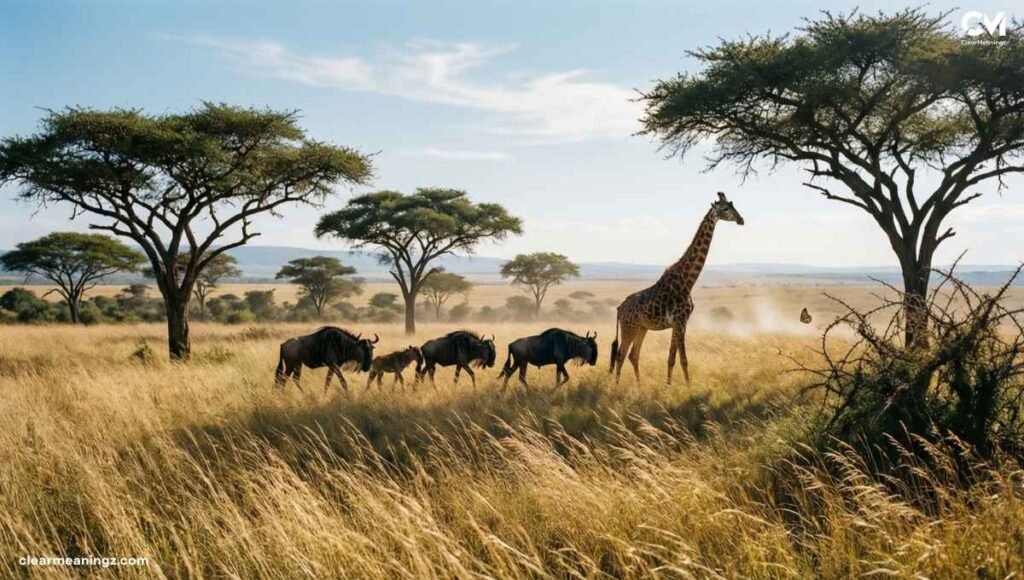
The savanna grassland is one of Earth’s most important and fascinating ecosystems. It covers roughly 20% of the planet’s land surface and plays crucial roles in climate, wildlife, and human life. Understanding this ecosystem deepens appreciation for the name Savannah.
Defining characteristics of savanna grasslands:
- Grasses dominate – Usually tall species that can survive fire and drought
- Scattered trees – Not enough to form a forest, but present throughout
- Seasonal rainfall – Distinct wet and dry seasons shape life here
- Fire-adapted – Regular fires actually help maintain the ecosystem
- High biodiversity – Supporting thousands of plant and animal species
Savannas exist on every continent except Antarctica.
While Savannah Africa is most famous, you’ll find grasslands in South America (the Cerrado), Australia, India, and parts of Southeast Asia. Each region has unique characteristics while sharing core features.
The wet and dry seasons create dramatic changes.
During the rainy season, grass grows lush and green. Flowers bloom. Animals give birth. Water holes fill. Life explodes across the landscape.
Then comes the dry season. Grass turns golden brown. Water becomes scarce. Trees drop leaves to conserve moisture. Animals migrate or adapt. It’s a test of survival.
This rhythm teaches important lessons:
- Cycles are natural – Life has seasons
- Change is constant – Adaptation is necessary
- Scarcity and abundance both pass – Nothing lasts forever
- Preparation matters – Use abundant times to prepare for lean ones
Fire plays a surprising role in savanna health.
Natural fires clear dead vegetation, return nutrients to soil, and prevent trees from taking over. Many plants actually need fire to germinate seeds. This shows how what seems destructive can be regenerative.
For the name Savannah, these ecological facts add depth.
The grassland isn’t fragile, it’s incredibly resilient. It survives drought, fire, and grazing pressure. Yet it remains beautiful. This mirrors the kind of strength many parents hope their daughters will develop.
The savanna also demonstrates simplicity’s power.
It’s not as complex as a rainforest or as harsh as a desert. It’s balanced. Functional. Beautiful without being showy. These qualities align with what makes the name Savannah appealing.
Grasslands also provide essential environmental services:
- Carbon storage – Grass roots hold massive amounts of carbon
- Soil health – Deep root systems prevent erosion
- Water filtration – Grasslands naturally clean water
- Food production – Many human food systems rely on grasslands
Children named Savannah might develop interest in environmental science.
The name connects them to real ecological systems. It can inspire questions: How do grasslands work? Why are they important? What threatens them? How can we protect them?
This educational aspect makes Savannah more than just pretty.
It’s a name with substance. It points toward real things in the world. It invites curiosity and learning.
Also Read About: What Does JSP Mean in Texting? Find Out Now
Savannah Meaning in Arabic
The Savannah meaning in Arabic requires some explanation. The name itself isn’t Arabic in origin, but we can explore how it’s understood and used in Arabic-speaking cultures.
First, let’s clarify the linguistic connection.
The word “savanna” came to English through Spanish “sabana,” which likely derived from the Taino word “zabana.” Some etymologists suggest earlier Arabic influences on Spanish, but this connection is debated and unclear.
In modern Arabic, the savanna grassland is called “سافانا” (sāfānā).
This is essentially a transliteration of the English/Spanish word. Arabic doesn’t have a native term for African savannas because these ecosystems don’t exist in most Arabic-speaking regions.
However, Arabic has beautiful words for plains and open land:
- “سَهْل” (sahl) – Plain, flat land, easy terrain
- “بَرِّيَّة” (barriyya) – Desert, wilderness, open country
- “مَرْج” (marj) – Meadow, pasture
- “صَحْرَاء” (ṣaḥrāʾ) – Desert, vast open space
These words carry meanings similar to savanna, openness, natural landscape, spaciousness. They evoke freedom and connection to earth.
When Arabic speakers use Savannah as a name, they typically keep the English pronunciation.
It’s written as “سافانا” (Sāfānā) or sometimes “سافانة” (Sāfāna). The name is recognized globally, so it doesn’t need translation.
Arabic names often carry deep meanings.
Traditional Arabic names reference qualities (like Jamila meaning beautiful), religious concepts (like Amina meaning faithful), or nature (like Yasmin meaning jasmine). Savannah fits the nature category well.
Some Arabic-speaking families choose Savannah for specific reasons:
- International appeal – Works across cultures and languages
- Modern feel – Contemporary without abandoning meaning
- Natural beauty – Connects to earth and creation
- Easy pronunciation – Despite being English, it’s accessible in Arabic
The name also aligns with Islamic values.
Islam emphasizes appreciation for Allah’s creation. The Quran frequently references nature, gardens, rivers, mountains, sky. A name celebrating grasslands and natural beauty fits this framework.
In Arabic culture, names often carry prayers or hopes.
When you name a child, you’re expressing what you wish for them. Choosing Savannah might mean hoping for:
- Freedom of spirit
- Peace and tranquility
- Natural grace
- Open-hearted generosity
It’s worth noting that name meanings vary by culture.
What Savannah means in English-speaking contexts might shift slightly in Arabic ones. The core remains, openness, nature, beauty, but cultural lens affects interpretation.
Savanna orSavannah
Both “savanna” and “savannah” are correct, but they’re used differently depending on context. Understanding when to use each spelling helps you make informed choices about the name.
Here’s the breakdown:
“Savanna” (one ‘h’):
- Scientific and geographical contexts
- Ecology and biology writing
- Academic papers and textbooks
- Describing the ecosystem generally
“Savannah” (with ‘h’):
- The city in Georgia
- Personal names
- More common in American English
- Poetic or descriptive writing
Why does this difference exist?
The spelling variation emerged as the word entered English. Some writers added the ‘h’ to match other English words ending in “-ah.” Others kept it simple with “-a.” Both forms became established over time.
For the name specifically, “Savannah” with the ‘h’ is standard.
This spelling distinguishes the personal name from the geographical term. It also connects more directly to Savannah, Georgia, which influenced the name’s popularity.
Here’s a simple guide:
- Naming a baby? → Savannah (with h)
- Writing about ecosystems? → Savanna (no h)
- Referring to the city? → Savannah (with h)
- Talking about African grasslands? → Savanna (no h)
The spelling matters for search engines and official documents.
If you’re researching the name for a baby, use “Savannah” in your searches. For ecological information, use “savanna.” This helps you find more relevant results.
Some parents deliberately choose the “savanna” spelling for names.
They prefer the simpler, cleaner look. They like that it’s slightly less common. It makes the name feel more unique while keeping the same pronunciation.
Official documents should match the birth certificate spelling.
If you name your daughter “Savannah,” keep that spelling consistent on school forms, medical records, and legal documents. Consistency prevents confusion.
Pronunciation remains identical.
Whether spelled with or without the ‘h,’ the name sounds the same: “suh-VAN-uh.” The emphasis falls on the second syllable in both cases.
Nicknames work with either spelling.
“Sav,” “Savvy,” “Anna,” and other short forms apply regardless of whether you use one ‘h’ or two. The diminutives aren’t affected by spelling choice.
Consider your child’s future when choosing.
“Savannah” with the ‘h’ might face less confusion since it’s the standard name spelling. Teachers, doctors, and others will likely assume this version. “Savanna” without the ‘h’ might require occasional correction.
Both spellings carry the same beautiful meaning.
The grassland imagery, natural connection, and peaceful qualities remain regardless of spelling. You’re choosing a lovely name either way.
Savannah Meaning at Clearmeaningz.com
At clearmeaningz.com, we believe names matter. They’re not just labels, they’re stories, meanings, and connections to something larger than ourselves. We’ve created this comprehensive resource to help you understand every aspect of the Savannah name meaning.
What makes this guide different?
We don’t just give you dictionary definitions. We explore the name from every angle, linguistic, spiritual, cultural, and personal. We help you see the full picture so you can make informed decisions or simply appreciate your name more deeply.
Here’s what we’ve covered in this complete guide:
✅ Origins – Where Savannah comes from linguistically and geographically ✅ Spiritual significance – The deeper meanings beyond surface definitions ✅ Biblical connections – How the name relates (or doesn’t) to scripture ✅ Hebrew explorations – Thematic connections to Hebrew concepts ✅ Nickname options – Popular short forms with meanings ✅ English definitions – Clear, straightforward meaning ✅ African connections – The iconic Savannah Africa landscapes ✅ Wildlife associations – The savanna animals that enrich the name ✅ Ecosystem insights – Understanding savanna grassland ecology ✅ Arabic perspectives – How the name works in Arabic contexts ✅ Spelling variations – Savanna or savannah explained
Why did we create such an extensive resource?
Because choosing a name is one of the most important decisions parents make. Because people want to understand their own names better. Because names deserve respect, research, and thoughtful exploration.
At clearmeaningz.com, we’re committed to:
- Accuracy – Providing fact-checked, reliable information
- Depth – Going beyond surface-level definitions
- Accessibility – Writing clearly so anyone can understand
- Cultural sensitivity – Respecting diverse perspectives on names
- Completeness – Covering topics thoroughly from multiple angles
The name Savannah has captivated parents for decades.
Its popularity peaked in the early 2000s but remains strong today. Parents are drawn to its natural beauty, sophisticated sound, and meaningful associations. It works across different cultures, regions, and social contexts.
People named Savannah often report positive associations.
They feel their name is both unique and familiar. They appreciate that it connects them to nature without being too unusual. They like the nickname flexibility it offers.
This guide serves multiple audiences:
- Expectant parents researching baby names
- People named Savannah wanting to understand their name better
- Writers and creators developing characters
- Name enthusiasts who love onomastics (name study)
- Anyone curious about linguistic and cultural meanings
We update our content regularly.
Name trends change. Cultural associations evolve. New research emerges. We stay current so you get the most relevant, useful information possible.
Thank you for choosing clearmeaningz.com as your naming resource.
We hope this comprehensive guide has given you exactly what you needed. Whether you’re naming a baby, exploring your own name, or simply satisfying curiosity, we’re honored to be part of your journey.
The name Savannah is a gift.
It connects your child to vast grasslands, to peace and freedom, to natural beauty and quiet strength. It’s a name that will serve her well throughout life, from playground to boardroom, from childhood to wisdom.
Choose it with confidence. Wear it with pride. Let it remind you daily of wide-open spaces, golden sunsets, and the endless possibilities ahead.
Also Read About: IGHT Mean in Text? The Answer Will Surprise You
Frequently Asked Questions
What does the name savannah mean?
Savannah Meaning refers to open grassy plains, symbolizing freedom, nature, calm beauty, and wide peaceful landscapes.
What is the real meaning of savanna?
The Savannah Meaning comes from Spanish sabana, describing treeless plains, warm climates, and naturally open land.
What does the name savannah mean spiritually?
Spiritually, Savannah Meaning connects with peace, freedom, inner strength, gentle energy, and a grounded life journey.
Is it savannah or savanna?
Savannah Meaning stays the same, but Savannah has an extra letter, while savanna is simpler spelling.
Is savannah a rare girl name?
Savannah Meaning is popular, not rare, especially in English-speaking countries where nature inspired girl names trend.
What does “savannah” mean in the Bible verse?
Savannah Meaning is not directly biblical, but open land themes connect with peace, promise, and guidance.
Conclusion
Savannah Meaning is soft, natural, and full of calm strength. Many parents search savannah name meaning when they want something peaceful yet strong. Others look for savannah name meaning biblical to feel a deeper connection. When asking what does the name savannah mean, the answer often points to open land, freedom, and beauty. The savannah meaning name brings thoughts of space, light, and quiet confidence. Simply put, what does savannah mean links to nature, peace, and a warm spirit.
Savannah Meaning also feels timeless and gentle. It fits someone kind, grounded, and full of grace. Even without strong biblical roots, savannah name meaning biblical ideas still connect to peace and promise. People asking what does the name savannah mean usually want meaning with heart. The savannah meaning name gives both beauty and depth. In the end, what does savannah mean is freedom, calm energy, and natural strength that lasts.

Hi! I’m the creator of ClearMeaningz, sharing simple and helpful content for everyone. With 2+ years of experience and 20+ happy clients, I break down topics into easy reads. My goal is to make learning fun and clear. Join me on this journey of knowledge and growth!