

A broken set up for pblemulator silently destroys your frame rate, causes audio desync, and makes every gaming session frustrating. Most users never realize their emulator configuration was wrong from the very first install. The real tips pblemulator experts follow start before any software even opens, beginning with organized BIOS firmware, correct directory mapping, and a fresh configuration .ini file.
Knowing exactly how to set up pblemulator means selecting the right Vulkan rendering backend for your dedicated GPU, managing shader cache files properly, and eliminating input lag through smart controller mapping. A stable clean slate installation with correct subdirectories setup delivers smooth emulation speed, sharp visuals, and reliable frame pacing every single session.
What To Know Before You Start
Before touching any settings, understanding your hardware and file requirements saves hours of frustration later.
Hardware Requirements That Actually Matter
Your single-core CPU performance has a bigger impact on emulation speed than total core count. Most emulators rely heavily on one or two cores running at high clock speeds rather than spreading work across many cores.
Key hardware factors to evaluate before starting:
- A dedicated GPU dramatically improves rendering performance over integrated graphics
- Systems using integrated graphics should expect lower internal resolution limits
- Strong single-core CPU performance is more important than having many cores
- At least 8GB of RAM helps prevent audio desync and stuttering during heavy scenes
Files You Must Prepare First
Gathering all required files before starting prevents errors mid-setup. The emulator cannot function properly without these organized correctly.
| File Type | Purpose | Recommended Storage Location |
| BIOS firmware | Core system emulation | Dedicated BIOS folder |
| ROM files | Game cartridge data | Organized game files folder |
| ISO files | Disc-based game images | Separate ISO subfolder |
| Configuration .ini file | Emulator settings storage | Root emulator directory |
Having these files sorted into a proper dedicated folder structure before launching ensures the emulator detects content without errors and keeps your emulator configuration clean from the beginning.
Anatomy Of A Config Failure
Most setup problems are not caused by weak hardware. They come from poor configuration decisions made during the initial install.
The Most Common Mistakes Users Make
Understanding why setups fail helps you avoid the same traps. Mixing nightly builds with outdated plugins is one of the leading causes of crashes and broken behavior.
The following mistakes are responsible for most reported emulator issues:
- Running nightly builds alongside an old configuration .ini file without resetting default settings
- Using incorrect subdirectories setup that prevents the emulator from finding game files
- Selecting the wrong graphics backend for your hardware generation
- Keeping integrated graphics as the active GPU instead of switching to a dedicated GPU
- Ignoring corrupted shader cache files after a failed software update
Common Failures at a Glance
| Problem | Root Cause | Quick Fix |
| Stuttering during gameplay | Real-time shader compilation | Pre-build shader cache files |
| Audio crackling | Audio desync from driver conflict | Enable WASAPI exclusive mode |
| Controller delay | Low polling rate | Increase polling rate in settings |
| Games not detected | Wrong directory mapping | Rebuild game files folder paths |
| Random crashes | Broken configuration .ini file | Perform clean slate installation |
| Slow frame rate | Integrated graphics active | Switch to dedicated GPU in settings |
Each of these failures has a direct fix. The key is identifying which category your problem falls into before attempting random changes.
The Exact Set Up For PBLEmulator You Need
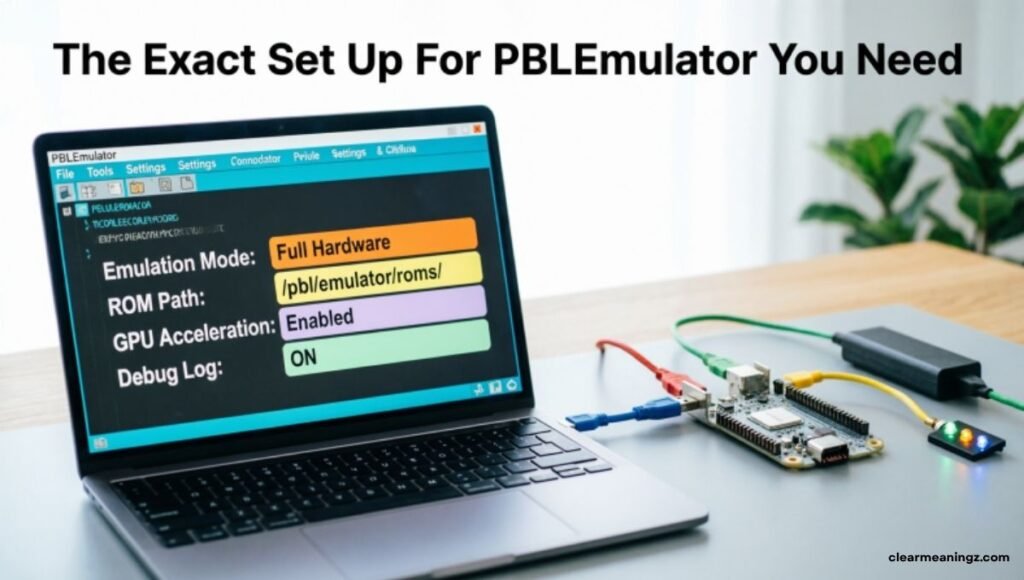
A reliable setup follows a specific sequence. Skipping steps early creates problems that are harder to fix later.
Installation Best Practices
Always install PBLEmulator into a dedicated folder that sits outside system directories like Program Files. This prevents permission errors and makes the emulator configuration easier to manage.
Follow these steps in order for a clean baseline:
- Create a dedicated folder in a non-system drive location
- Perform a clean slate installation with no leftover files from previous installs
- Generate a fresh configuration .ini file by launching the emulator once before changing any settings
- Separate BIOS firmware, ROM files, ISO files, and save states into clearly labeled subfolders
- Enable your dedicated GPU in system display settings before configuring the emulator
Why Default Settings Matter
Default settings in most emulators are tuned for broad compatibility, not peak performance. They give you a working starting point but often need adjustment based on your specific hardware. Always note what the default settings are before making changes so you can roll back easily if something breaks.
Mapping Your Directories
Correct directory mapping is one of the most impactful steps in the entire setup process. Without it, the emulator cannot find your games, BIOS firmware, or save states.
Building Your Folder Structure
A well-organized subdirectories setup prevents almost every file-related error. The structure below works reliably across most system configurations:
- Root emulator folder containing the main executable
- BIOS subfolder for all firmware files
- ROMs subfolder organized by system or genre
- ISO files subfolder for disc-based titles
- Saves subfolder containing both save states and memory card backup files
- Shaders subfolder for storing shader cache files
Once the structure is in place, point each emulator path setting to the correct subfolder. Incorrect paths lead to missing game entries, broken save states, and failed frontend launcher scans.
Graphic Backends Compared
Backend selection is where many users make performance-killing mistakes. Each backend has specific strengths based on your hardware generation.
Vulkan vs OpenGL vs Direct3D 11
The Vulkan rendering backend delivers the fastest performance on modern AMD and NVIDIA graphics cards. It handles GPU offloading efficiently and supports high internal resolution with strong frame pacing. However, it requires a warm-up period during first launches while shader compilation completes.
The OpenGL rendering backend offers wide compatibility and works well on older GPUs and integrated graphics setups. It places more load on single-core CPU performance, which can limit frame rate on budget systems with aggressive 4K upscaling enabled.
Direct3D 11 serves as a solid Windows fallback. It avoids many shader cache issues seen in early Vulkan implementations and offers stable frame pacing even if raw speed is slightly lower.
| Backend | Best For | Key Strength | Weakness |
| Vulkan rendering backend | Modern dedicated GPU | Fastest GPU offloading | First-launch shader compilation stutter |
| OpenGL rendering backend | Legacy and integrated graphics | Wide compatibility | CPU-heavy, struggles with 4K upscaling |
| Direct3D 11 | Windows fallback systems | Stable frame pacing | Slightly slower than Vulkan |
Choose based on your hardware generation. Modern GPUs should default to Vulkan. Older systems benefit more from OpenGL or Direct3D 11 depending on driver stability.
Compiling The Shader Cache
Shader compilation confuses many new users. Understanding what it does prevents panic when stuttering appears during first-time gameplay.
What Shader Cache Files Actually Do
Every visual effect in an emulated game must be compiled into a format your GPU understands. This compilation happens in real time during first play and the results are stored as shader cache files. Once stored, those effects load instantly on future sessions, eliminating the stutter.
Best practices for managing shader compilation:
- Store shader cache files on SATA SSD or faster storage for quick loading
- Never delete cache folders unless troubleshooting a specific corrupted shader cache problem
- Keep GPU drivers updated to avoid compilation failures
- Use the Vulkan rendering backend for the most efficient shader compilation workflow
- Close background applications while cache builds to avoid interruptions
CRT Shaders and Visual Filters
CRT shaders and CRT filtering are optional post-processing effects that simulate the look of classic retro displays. They add scanlines and soft glow effects that many players prefer for older titles. These effects do increase GPU load slightly, so users with integrated graphics should select lightweight CRT presets to maintain stable frame rate.
Beating Input Lag
Even a fraction of a second of input delay makes games feel unresponsive. Most input lag problems come from fixable configuration issues.
Controller and System Settings
The following adjustments produce the biggest improvements in controller responsiveness:
- Use wired controllers instead of wireless to eliminate Bluetooth latency
- Enable XInput support for modern gamepads to ensure proper button mapping
- Use SDL2 mapping as a fallback when XInput causes detection issues
- Increase polling rate in controller settings to the highest available value
- Reduce analog stick deadzone to improve movement precision
- Disable V-Sync if it is adding frame delay without improving visual stability
- Enable WASAPI exclusive mode in audio settings to eliminate audio desync that worsens perceived input lag
- Launch in fullscreen mode (-f) using command-line arguments for the lowest display latency
Managing Save States And Memory Cards
Understanding Save States
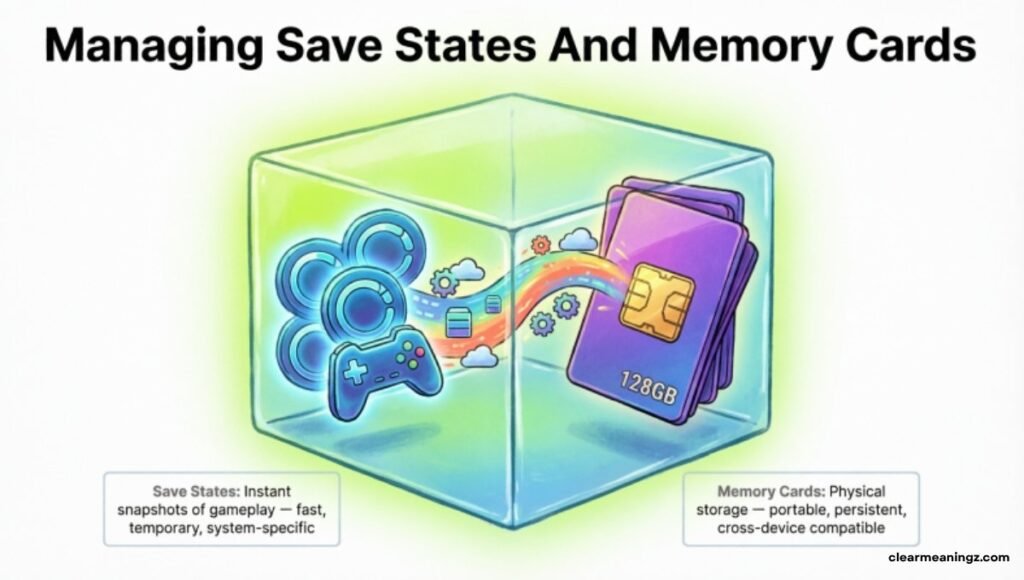
Save states let players freeze and resume gameplay from any moment. They work well for testing emulator configuration changes or getting through difficult sections. However, save states can break after switching between nightly builds and stable release versions, making them unreliable for long-term storage of important progress.
Protecting Memory Card Backups
Memory card backup files behave more like original console saves. They remain stable across software updates and different emulator versions. Store backup copies inside a dedicated folder organized by game title and back them up weekly to prevent progress loss from corrupted files or accidental deletion.
Frontend Integration
A frontend launcher transforms PBLEmulator from a technical tool into a polished gaming library experience. Instead of launching the executable manually each time, a frontend provides a visual box art interface with controller-friendly navigation.
What a Frontend Launcher Provides
Useful features included in most frontend launchers:
- Automatic box art interface with metadata scraping
- Unified library view across multiple emulators
- Controller-friendly navigation without keyboard use
- Custom command-line arguments for fullscreen mode (-f) and other launch parameters
- Automatic detection of ROM files and ISO files through directory scanning
For frontend integration to work correctly, your directory mapping must be accurate. The launcher cannot detect games or BIOS firmware if paths are wrong or folder structures are inconsistent.
Scaling And Visual Clarity
Internal Resolution and Upscaling Options
Higher internal resolution makes older games look sharper on modern displays by rendering textures at greater detail. The right setting depends entirely on your GPU capability.
| Hardware Type | Recommended Internal Resolution |
| Integrated graphics | Native to 2x |
| Mid-range dedicated GPU | 3x to 4x |
| High-end dedicated GPU | 6x to 8x |
Advanced upscaling and 4K upscaling settings push visual quality further but require a capable dedicated GPU to maintain stable frame pacing. Frame pacing matters as much as resolution. Inconsistent frame delivery causes visible stutter even when frame rate appears acceptable in counters.
System Updates And Maintenance
Regular maintenance keeps your setup stable as both the emulator and your system evolve.
Maintenance Checklist
Follow this routine to prevent problems from building up over time:
- Update GPU drivers regularly to maintain Vulkan rendering backend stability
- Back up save states and memory card backup files at least once per week
- Test stable release versions before committing to nightly builds
- Clear corrupted shader cache files when stuttering returns on previously smooth games
- Keep BIOS firmware files and game files folder paths verified after any emulator update
- Store a backup copy of your configuration .ini file before installing any update
Also Read About: Esports News DualMedia Knows Before Anyone Else
Frequently Asked Questions
How to Update PBL Version?
Always check the official PBLEmulator settings panel for available software updates. Installing the latest stable release improves emulation speed and fixes known bugs.
Emulator for PUBG Mobile Lite?
The best emulator for PUBG Mobile Lite offers smooth frame pacing and strong single-core CPU performance. A proper set up for pblemulator ensures stable and lag-free gameplay.
Emulator for Programming?
Emulators for programming simulate different system environments for testing code. A clean set up for pblemulator style configuration helps developers run isolated environments without hardware conflicts.
Set Up for PBLEmulator?
A correct set up for pblemulator requires organized BIOS firmware, ROM files, proper directory mapping, and the right graphics backend selected for your dedicated GPU.
How to Set Emulator Controls for PUBG?
Enable XInput support and adjust analog stick deadzone settings carefully. A smooth set up for pblemulator control configuration reduces input lag and improves overall PUBG gameplay responsiveness.
Conclusion
A proper set up for pblemulator transforms frustrating crashes and lag into smooth, enjoyable gameplay. Start with a clean slate installation, organize your BIOS firmware, ROM files, and save states into a dedicated folder before touching any settings. Follow the right tips pblemulator veterans swear by, including selecting the correct Vulkan rendering backend for your dedicated GPU and building your shader cache files before extended play sessions.
Knowing how to set up pblemulator correctly means understanding directory mapping, reducing input lag through proper controller mapping, and maintaining your configuration .ini file regularly. Every step directly impacts your emulation speed, frame pacing, and visual quality. Follow these steps once and your setup stays stable long term.

Hi! I’m the creator of ClearMeaningz, sharing simple and helpful content for everyone. With 2+ years of experience and 20+ happy clients, I break down topics into easy reads. My goal is to make learning fun and clear. Join me on this journey of knowledge and growth!